
Walking the Line:
Privacy vs. Personalization
in Social Media Algorithms
A semester-long research project uncovering how TikTok’s algorithm works, what makes its approach to personalization fundamentally different from every other platform, and where drawing that line gets complicated.
Research & Analysis
Visual Design
Public Presentation
★ Award Nominated
1 Semester
OF INDEPENDENT RESEARCH
15+ Sources
INCLUDING CONGRESSIONAL REPORTS & ACADEMIC STUDIES
20 Minute
LIVE FINAL PRESENTATION TO A FULL UNIVERSITY MARKETING CLASS
2 Nominations
HONORS RESEARCH SYMPOSIUM & OUTSTANDING MARKETING GRADUATE
THE PROJECT
More Than a Presentation
This was a semester-long independent honors contract, not just a class assignment. It required sourcing real academic research, government documents, and journalism, then synthesizing it into something an entire classroom could actually learn from.
For my Honors Contract in International Marketing at UW–Eau Claire, I spent a full semester researching the mechanics of social media algorithms with TikTok as the primary focus. The research spanned academic papers, 50+ page congressional reports on data privacy and national security, and deep dives into the U.S. legislative battle over TikTok’s ownership.
The goal wasn’t just to understand how the algorithm works—it was to understand why it works better than anything else out there, what that means for everyday users, and where the line gets crossed between personalization that serves people and data collection that exploits them.
The final deliverable was a live research presentation to my entire International Marketing class. It was received well enough that my advising professor nominated me for academic recognition and encouraged me to pursue the research further as a formal study—a huge compliment, even though the time commitment wasn’t in the cards that semester.
Deep Research
For my Honors Contract in International Marketing at UW–Eau Claire, I spent a full semester researching the mechanics of social media algorithms with TikTok as the primary focus.
Visual Design
Translated dense technical and legal content into a polished, visually cohesive presentation, conceived and designed from scratch.
Public Presentation
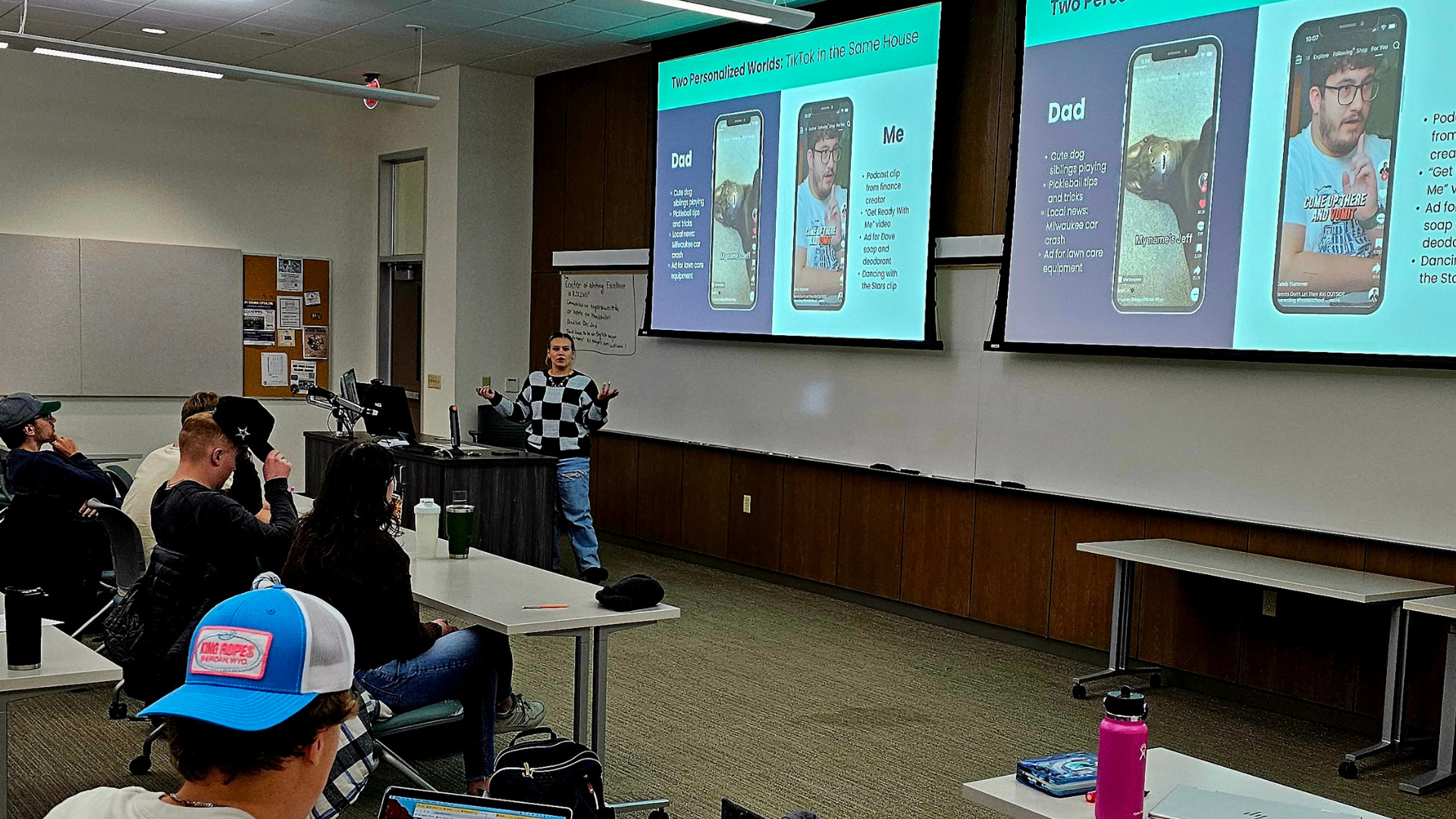
Translated months of complex algorithm and privacy research into a live presentation designed for everyday app users, not researchers. The goal was simple: anyone in the room could walk away having actually learned something.
KEY FINDINGS
What the Research Revealed
Four major findings came out of this research, each building toward a bigger picture of how algorithms shape what we see, who profits, and what we unknowingly give away just by scrolling.
FINDING #1
How the Algorithm Actually Works
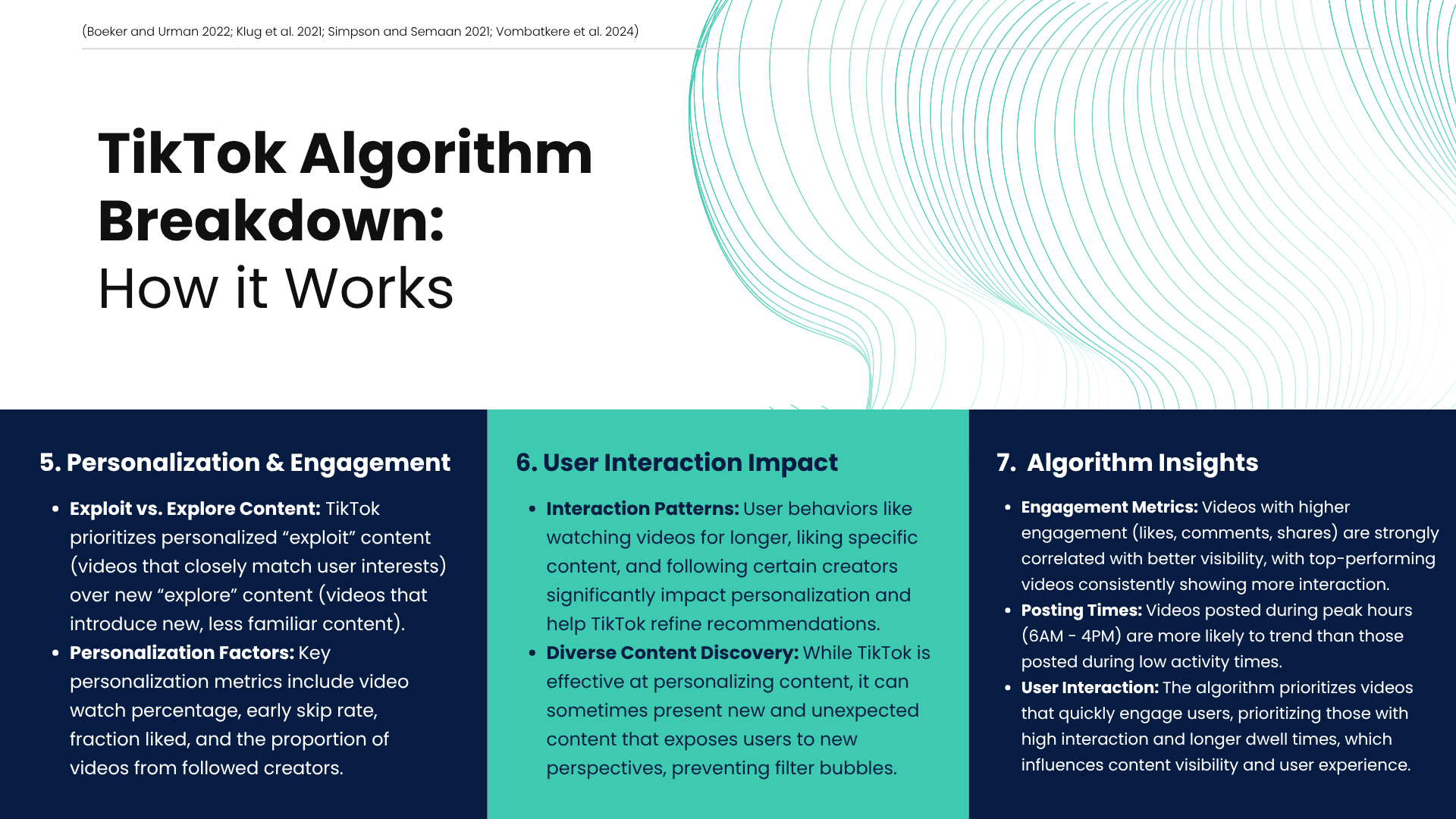
TikTok’s algorithm operates on a simple but powerful idea: it doesn’t need you to tell it what you like. It figures it out by watching you. Every time you watch a video to the end, skip one in the first two seconds, like something, or follow a creator, the algorithm logs it. It uses those signals to build a content profile around you, then sorts every video it could show you into two buckets: exploit content (videos it already knows you’ll engage with based on your behavior) and explore content (new topics it tests on you to see if your interests are expanding). The more you use it, the more accurate it gets. Watch time, early skip rate, likes, and follows are the heaviest weighted factors, and they update in real time. That’s how you end up two hours in without noticing—and why my feed and my dad’s feed, on the same app at the same time in the same house, can look like they are built for two completely different people.
FINDING #2
Why TikTok Had the Advantage No One Else Did
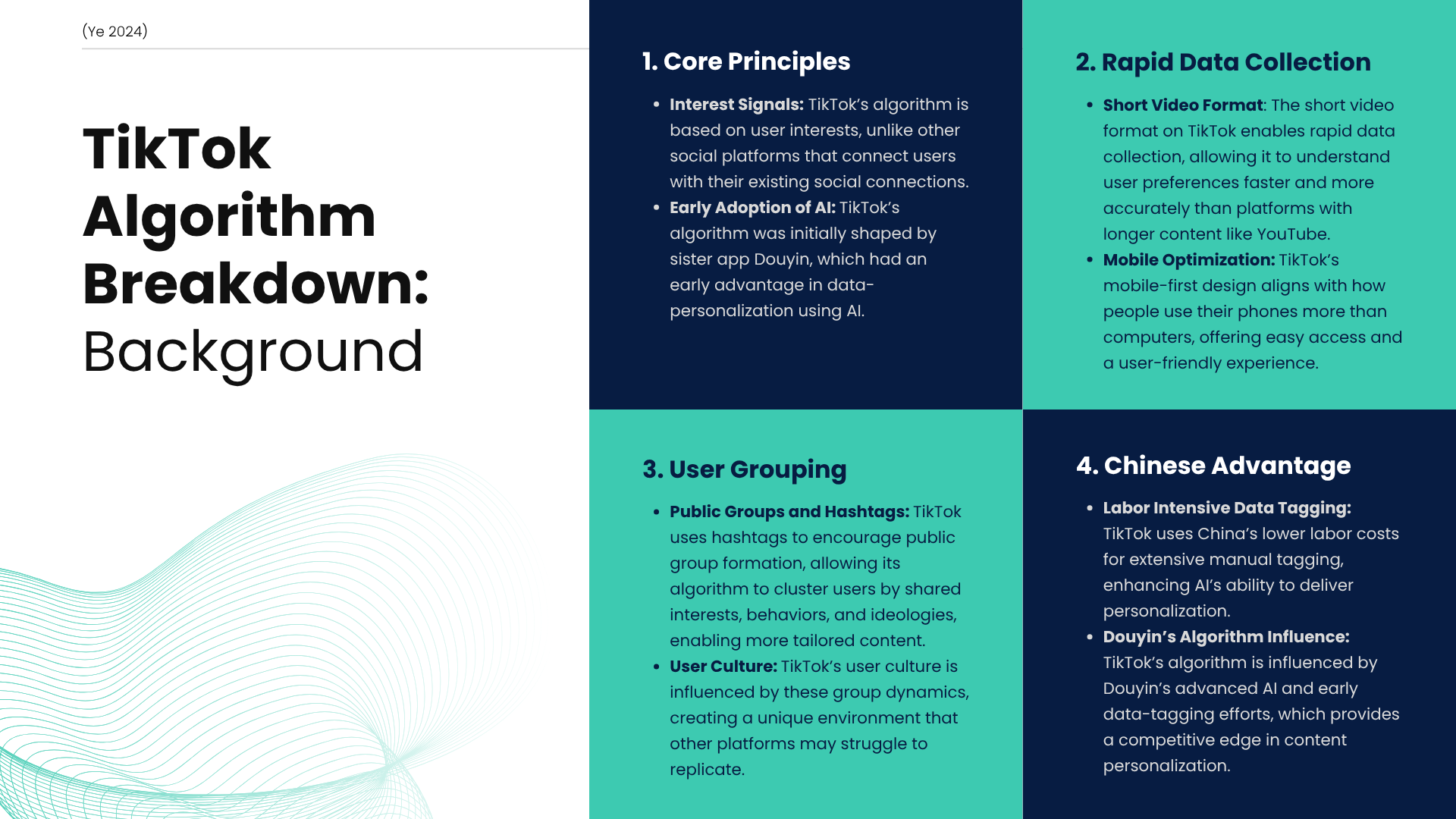
TikTok didn’t build the world’s most effective algorithm by accident. Before AI could do the heavy lifting on its own, its parent company ByteDance used China’s significantly lower labor costs to employ teams of people to manually tag and categorize massive amounts of video content. That investment in data quality gave their AI models better training material earlier than any US competitor could match. Add to that the fact that TikTok inherited its core algorithm from Douyin, ByteDance’s Chinese platform, which had already been refined on hundreds of millions of users before TikTok ever launched in the US. By the time American users downloaded it, the algorithm was already mature. The short-form video format accelerated this further—TikTok could gather more behavioral data per hour of use than platforms with longer content like YouTube, meaning it learned faster. The result was explosive growth in the US that no domestic platform had anticipated and none were equipped to compete with.
FINDING #3
What US Platforms Copied, and What the US Government Still Can’t Access
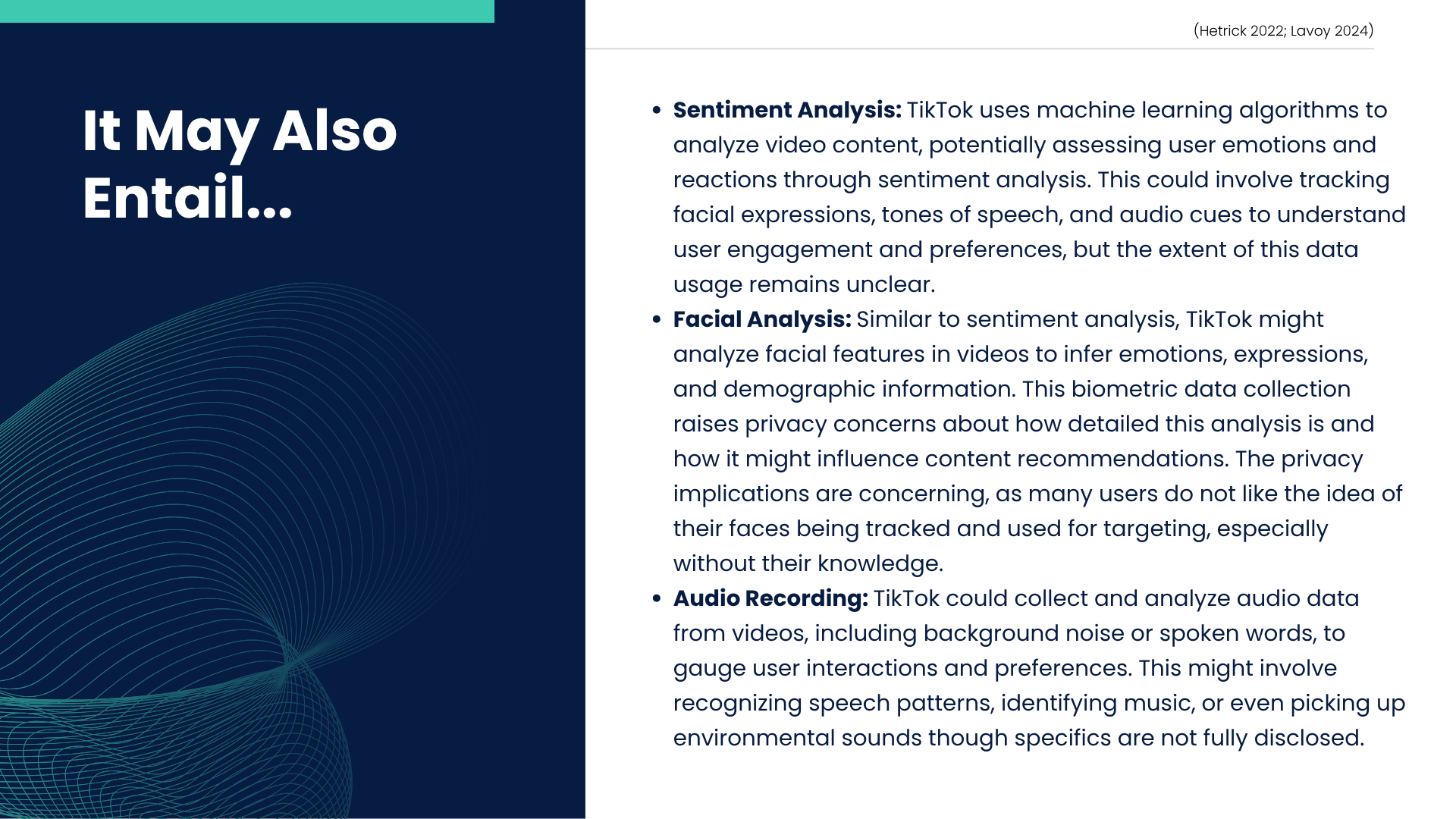
When TikTok’s growth became impossible to ignore, every major US platform responded. Meta launched Reels, Snapchat launched Spotlight, YouTube launched Shorts—all directly emulating TikTok’s interest-based, short-form, algorithmically-driven feed. But there was a bigger concern driving the US response than just competition. TikTok is owned by ByteDance, a Chinese company, which means the US government has no visibility into how the algorithm actually operates, what data it collects, or who can access it. And TikTok has never fully disclosed how its algorithm works. Even after congressional hearings, lawsuits, and years of public scrutiny, the full picture remains unknown—which is exactly what makes the legislative push to force a sale or ban so significant. If an American company built this, regulators could demand answers. With TikTok, they can’t. That opacity, combined with the breadth of personal data it collects (potentially including sentiment analysis, facial data, and audio), is what turns a personalization debate into a genuine national conversation about transparency, ethics, and who should be allowed to know this much about you.
FINDING #4
When Personalization Goes Unchecked, Everyone Pays the Price
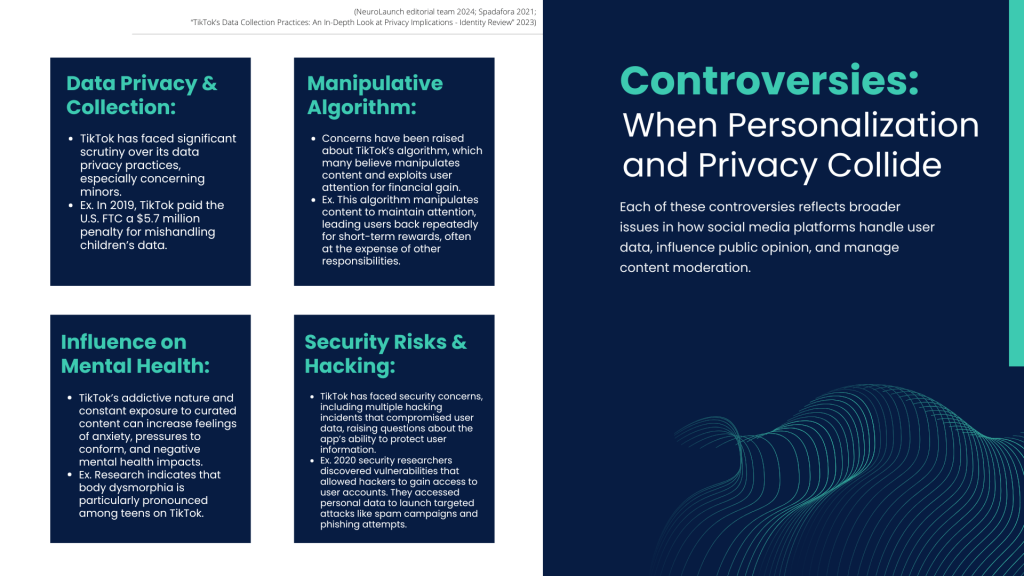
At its core, TikTok’s algorithm isn’t just built to serve you content you’ll enjoy. It’s built to keep you on the app as long as possible so the platform can serve you more ads and make more money. That distinction matters. Research shows this kind of hyper-personalized, dopamine-driven design has real consequences, particularly for younger users, including increased anxiety, social comparison, and addictive usage patterns. And when the data being collected to fuel all of this is left without proper oversight, the risks go further. TikTok has already been fined $5.7M by the FTC for mishandling children’s data, and a 2020 security breach exposed user accounts to targeted phishing attacks. These aren’t isolated incidents. They’re examples of what happens when businesses are able to collect and leverage deeply personal data without sufficient guardrails, and exactly why government regulation and clear boundaries around data use aren’t optional.
WHY THIS MATTERS
Every time you open TikTok, a system built to study you is already running. It knows what keeps you watching, what makes you stop, and how to use that against you to keep you on longer. That’s not a conspiracy. It’s documented, it’s profitable, and without the right guardrails in place, there’s nothing stopping it from going further.
IN CONCLUSION
This project was one of the most rewarding things I worked on in college. Getting to dig into something this layered, the technology, the policy, the human impact, and then find a way to make the information accessible and meaningful to a room full of people was exactly the kind of work I love doing. It’s a topic I genuinely keep up with in my free time, and one I’m excited to continue following as social platforms evolve, regulations catch up, and the conversation around data privacy keeps growing.
 Faith Kierzek